



In recent years, Valentine’s Day has established itself as one of the most important dates for brands. 14 February has become a strategic opportunity for brands to increase their sales, with ideas that redefine their discourse on love and connect emotionally with audiences who are increasingly critical of traditional clichés.
In 2026, this evolution has become particularly visible, with campaigns that focus on more honest, inclusive and relatable narratives, where humour, self-love and non-normative relationships take centre stage over idealised romanticism.
Opticalia and the everyday nature of love
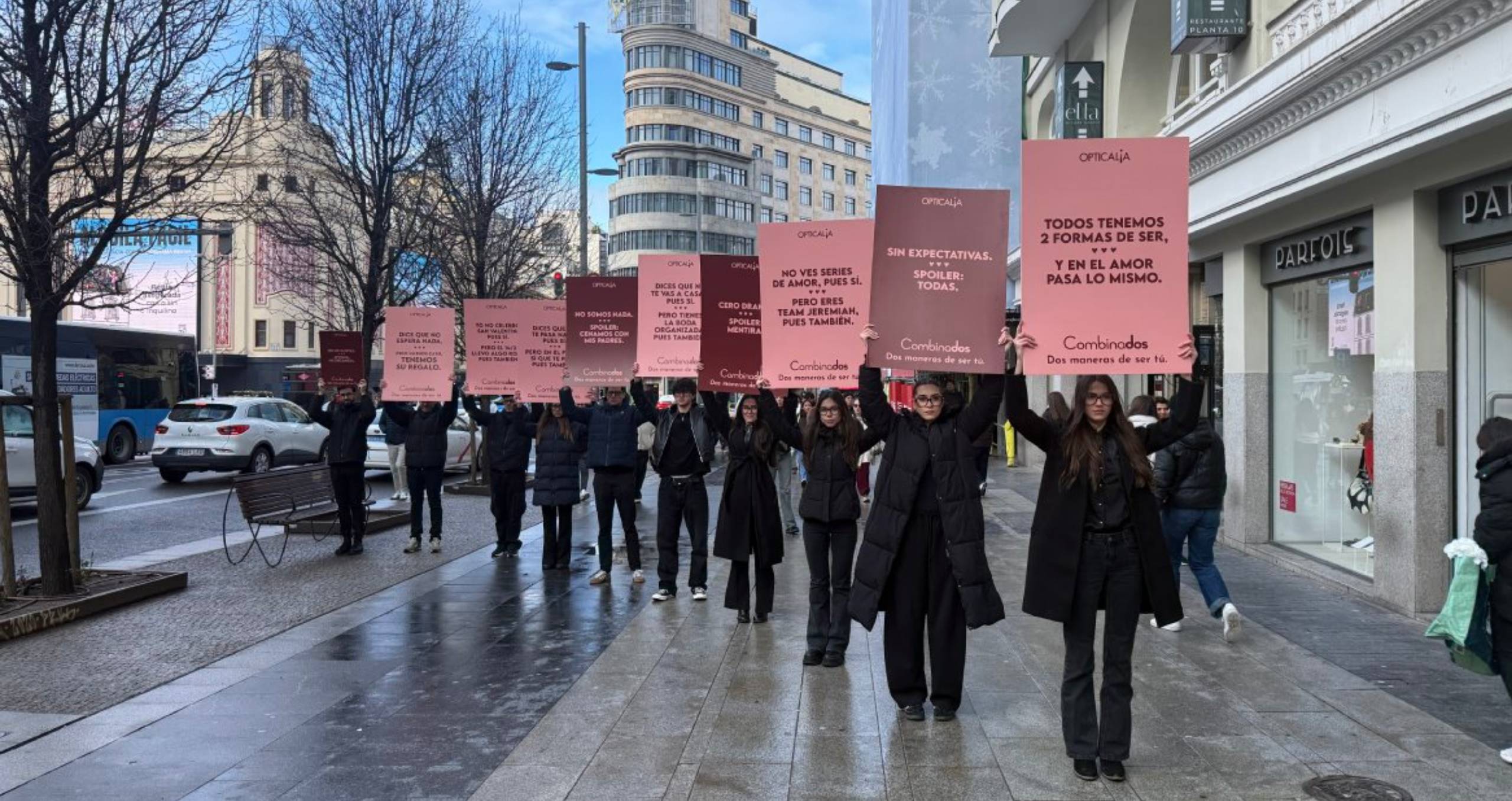
Opticalia has been one of the brands that has best managed to translate its brand positioning into the emotional territory of Valentine’s Day with its campaign ‘Two ways of being in love’.
Based on its usual creative concept focused on duality, the brand has taken to the streets with a street marketing campaign that highlights the contradictions and nuances that define both personality and emotional relationships.
Through direct messages and recognisable situations, Opticalia moves away from the sugar-coated discourse of romantic love to show everyday realities with which the public can easily identify. The campaign naturally connects the product with a broader reflection on authenticity and the acceptance of different ways of feeling, thus reinforcing a coherent and relevant narrative in a context saturated with similar messages.
Shared moments at Ribs

In the restaurant sector, Ribs has opted for a more traditional approach focused on shared details as a starting point for Valentine’s Day. Under a narrative that highlights simple but meaningful moments, the brand has launched an exclusive product designed for sharing, accompanied by a specific atmosphere in its restaurants and a digital activation that amplifies the message.
In this way, Ribs reinforces its positioning as a space for meeting and shared enjoyment, moving away from a grandiose vision of 14th February.
Desigual and Nicki Nicole prioritise self-love
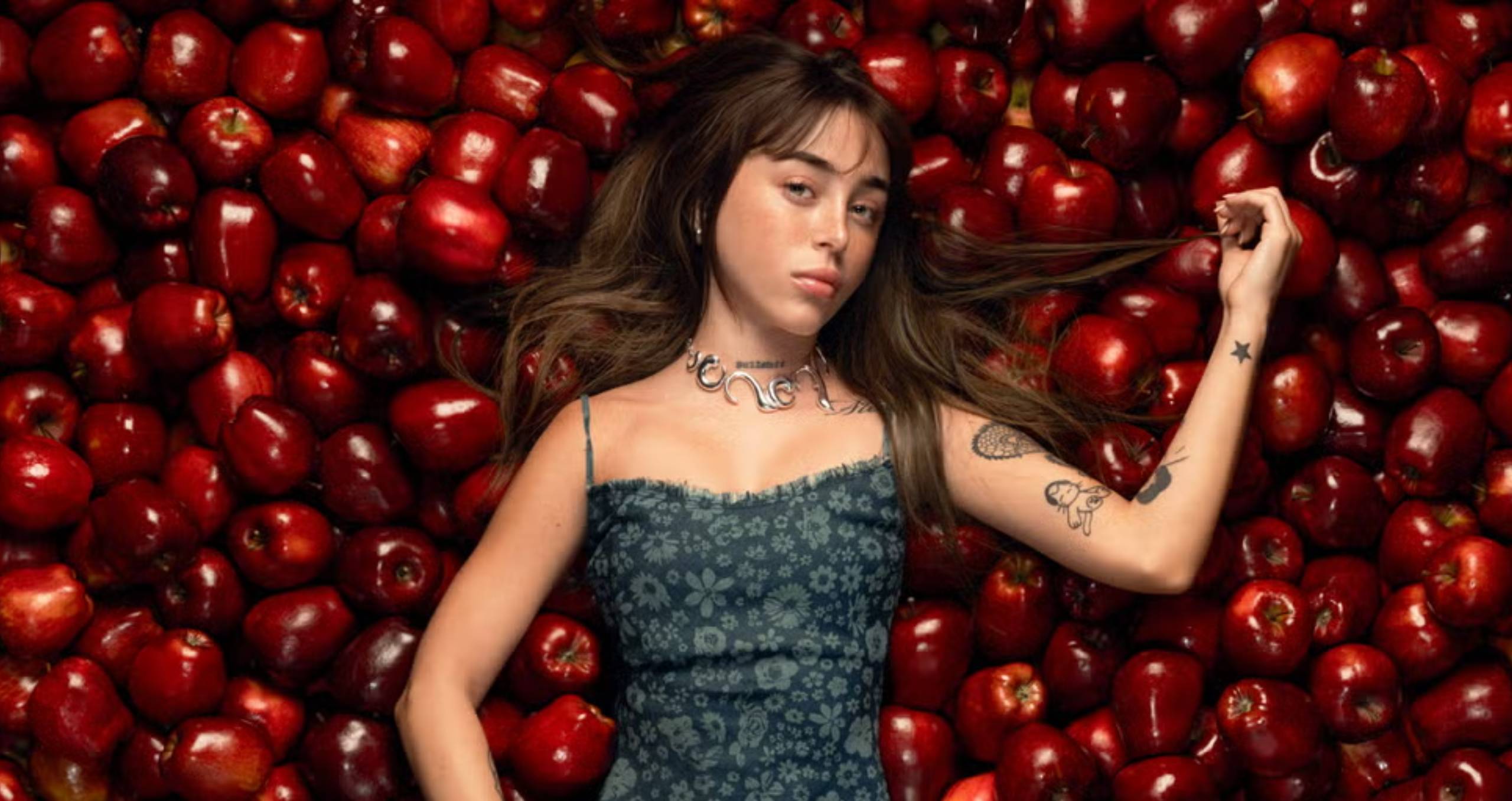
This Valentine’s Day, fashion brand Desigual has teamed up with artist Nicki Nicole for the ‘Boys Lie’ campaign. The brand proposes a celebration of love from a contemporary perspective that prioritises self-love, friendship and emotional independence.
The choice of an ambassador with a strong cultural presence reinforces the authenticity of the message and positions Desigual as a brand capable of engaging with new ways of understanding relationships and personal identity.
The “infidelity” of Museo del Jamón
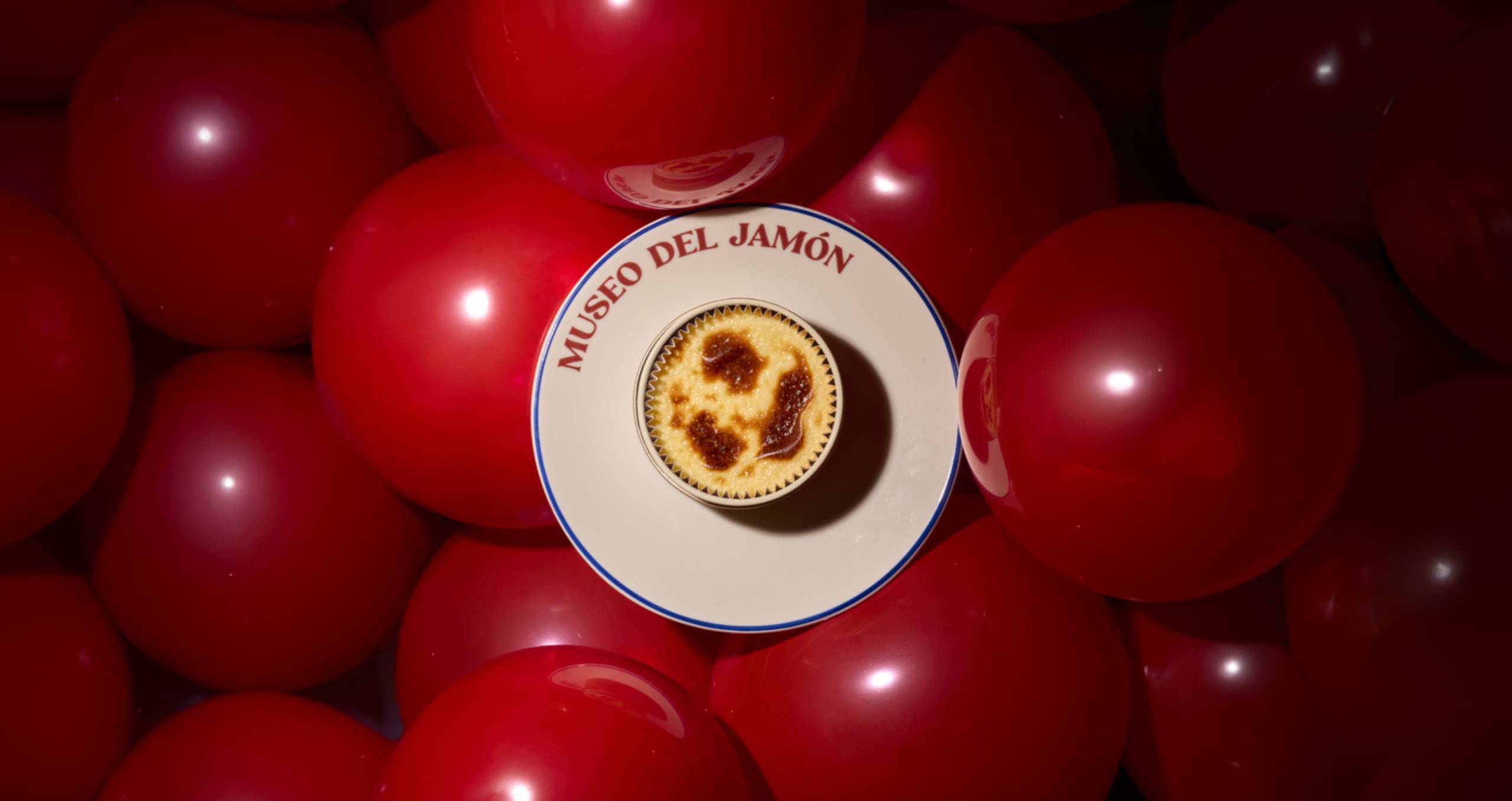
Museo del Jamón has surprised everyone this Valentine’s Day with a provocative and humorous campaign. Using a play on words around the expression ‘poner los cuernos’ (to cheat on someone), the brand has linked the concept of infidelity with cheese in an ironic and light-hearted way.
Although it is a simple campaign, its strength lies in its ability to take a highly recognisable cultural insight and turn it on its head with humour, achieving notoriety without the need for large creative displays. This type of proposal shows how an irreverent take on Valentine’s Day can be particularly effective for brands with a popular and approachable personality.
The most artistic vision of El Corte Inglés
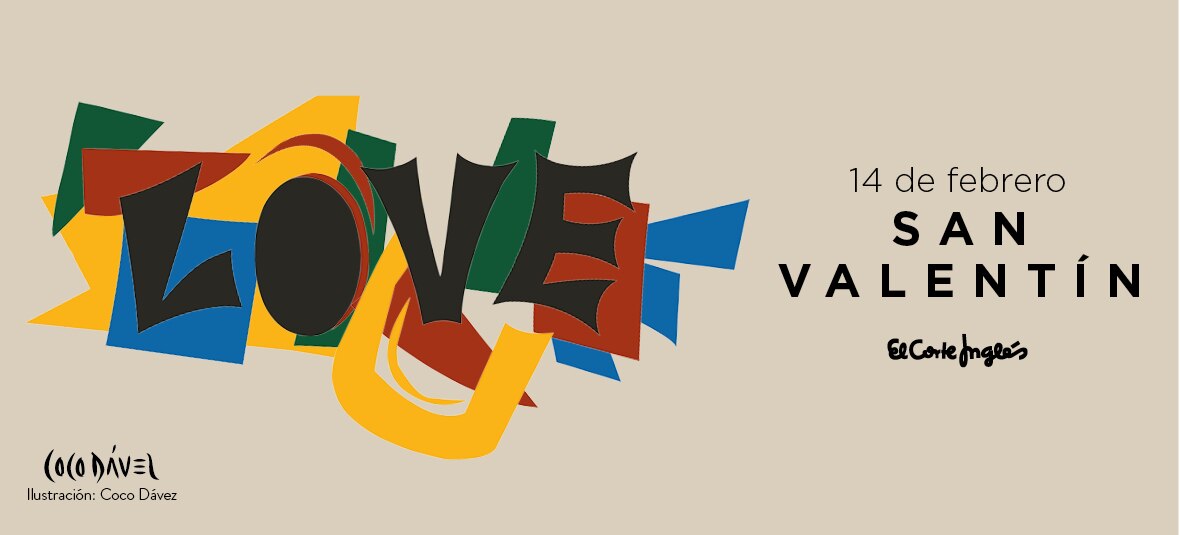
El Corte Inglés has committed to a strategy based on artistic collaboration and emotional segmentation of its message for 2026. The alliance with illustrator Coco Davez and singer-songwriter Valeria Castro has allowed the brand to renew its visual imagery and connect with a younger, more urban audience, without giving up its position as a benchmark for consumption on key dates.
The campaign presents Valentine’s Day as a celebration of love in all its forms, integrating proposals for couples, friends and self-love within the same narrative. This broad approach reinforces the idea that 14 February no longer responds to a single relational model, but adapts to diverse and changing realities.
Overall, the 2026 Valentine’s Day campaigns reflect a clear evolution in the way brands approach this date. In contrast to the homogeneous discourse of the past, communication is now more honest, pluralistic and connected to the real lives of consumers. Creativity is being used to tell stories that prioritise emotional identification, humour and authenticity, demonstrating that love remains fertile ground for advertising as long as it is approached from a contemporary perspective that is consistent with current social values.